
How Crown Thinning Helps a Tree Survive Brutal Summers
QUICK ANSWER: Crown thinning is selective pruning that removes a modest share of small branches from inside the canopy so sunlight and air can move through the tree. Done correctly, it cuts the wind sail that causes summer limb failure, lets heat escape from a dense crown, and reduces the amount of foliage a stressed root system has to keep watered. It is not a haircut and it is not topping. A sound thinning job keeps the tree's natural shape, removes no more than about a quarter of the live foliage in one season, and leaves the interior free of the stripped, bare look that causes sunburn and weak regrowth. Late fall through winter is the usual window for most valley trees, and a certified arborist should decide how much to take.
By the second week of a Modesto heatwave, most trees look about the way people feel. Leaves curl at the edges, the shade underneath is dense but strangely hot, and the top of the canopy seems to hold its breath until the evening breeze finally arrives. Trees that have never given a homeowner trouble start dropping small branches on a calm afternoon, or turn crispy at the tips in August even though the irrigation never missed a day.
Often the problem is not the tree's roots or its watering. It is the canopy itself. Over years of growth, a healthy tree can pack in far more foliage, and far more crossing and crowded branches, than it can comfortably support through a hundred degree stretch. Crown thinning is the pruning method arborists use to fix that, and when it is done well it is one of the most useful things you can do for a mature tree before summer arrives.
This article explains what crown thinning actually is, how it helps a tree get through extreme heat, which Central Valley species benefit most, what bad thinning looks like, and how to time the work so the tree comes through it stronger.
What Crown Thinning Is and What It Is Not
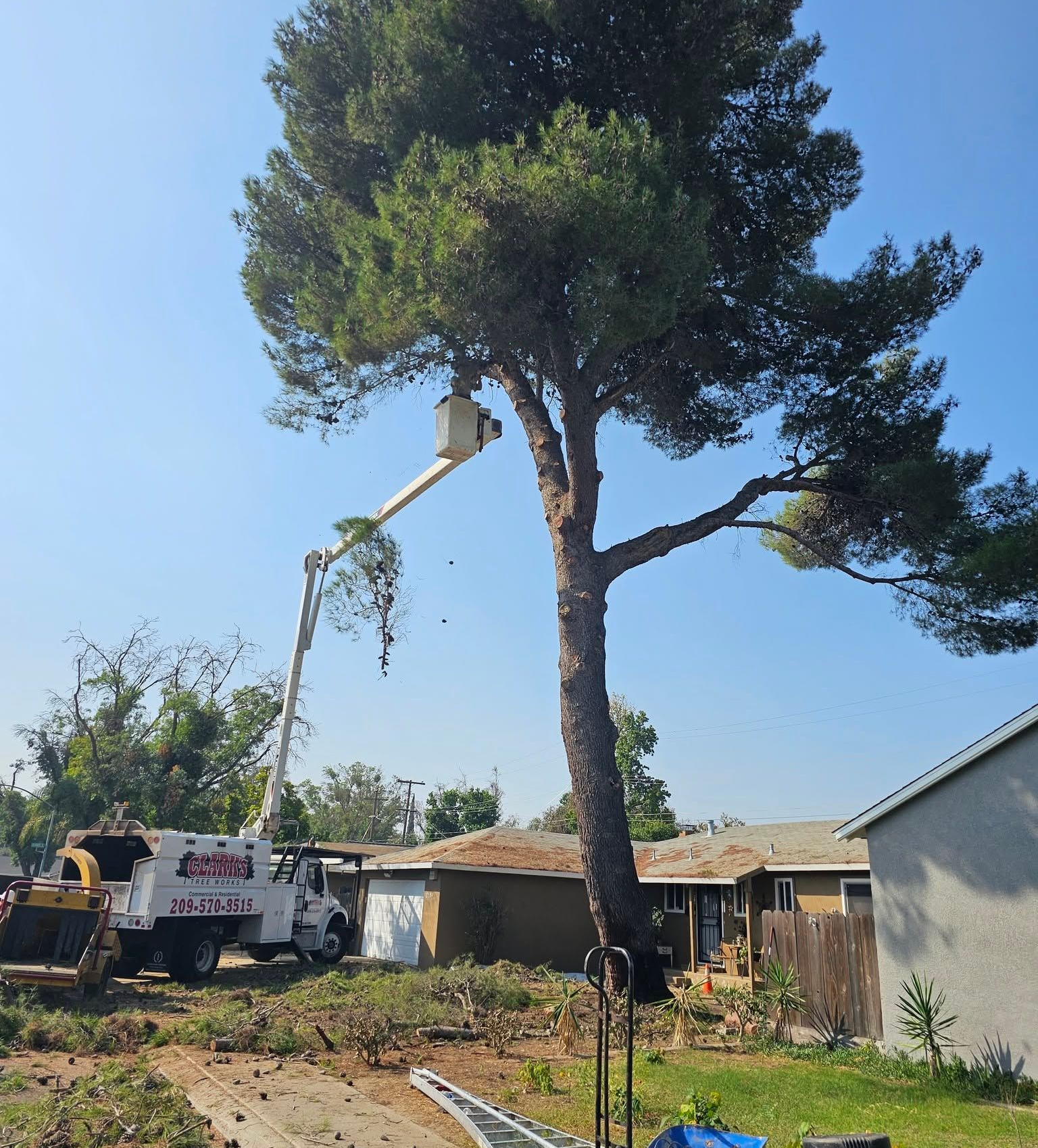
Crown thinning is selective removal of live branches, mostly small ones, from throughout the canopy. The goal is to open the crown evenly so light and air reach the interior, while the tree keeps its natural outline. An arborist looks for branches that cross and rub, limbs growing straight inward, tight clusters of shoots on the same spot, water sprouts, and deadwood. Those are the pieces that add weight and density without adding much value.
It helps to understand what thinning is not. It is not topping, which cuts large limbs back to stubs and ruins a tree's structure. It is not a crown reduction either, which shortens branches to reduce the overall size of the tree. And it is certainly not lion tailing, where the inside of every branch is stripped bare and only a tuft of leaves is left at the end. That last practice is common among untrained crews, and it does the opposite of what thinning is meant to do.
A good thinning cut is small and deliberate. Each one is made back to a branch junction or a healthy lateral so the tree can seal the wound, and the work is spread across the whole crown rather than concentrated in one spot. When you stand under a properly thinned tree, you should be able to see patches of sky, but the tree should still look full and balanced from the street.
Why a Dense Canopy Struggles in Valley Heat
A tree is a water system with leaves at the end of it. Every leaf releases moisture to the air as it cools itself and moves water up from the roots. During a long heatwave, a heavy canopy can ask more of the root system than the soil is able to deliver, even when the tree is being watered. The leaves respond by closing pores, scorching at the edges, and dropping early, which is the tree rationing what it has left.
Thinning helps in a few connected ways.
Less Foliage To Supply
Removing crowded growth reduces the leaf surface roots must support. Remaining branches receive more available water, helping a thinned tree maintain healthy color longer during late summer.
Better Air Movement
Dense canopies trap warm, humid air between leaves. Thinning opens the crown, improving airflow, cooling interior branches, drying moisture, and reducing conditions that encourage fungal problems.
More Light Inside The Tree
Opening the canopy allows sunlight to reach interior branches, encouraging healthier foliage throughout the tree. Better light distribution supports stronger growth and improves recovery from environmental stress.
Less Weight And Wind Load
A dense crown catches wind like a sail, increasing strain during storms. Thinning allows air to pass through, reducing pressure on branches, unions, and the trunk.
Valley Trees That Benefit Most
Not every tree needs thinning, and species matters a lot. Some of the most common trees around Modesto, Turlock, and Oakdale are the ones that benefit most from a careful job.
Valley oaks and other oaks tend to build wide crowns with heavy, long laterals. Thinning on oaks has to be conservative and lighter than people expect, and it is more about reducing end weight and removing crossing wood than opening the tree up. Oaks are also sensitive to timing and wound care, so cuts should be small and the work should follow the arborist's seasonal guidance.
Sycamores and other shade trees that grow fast can end up with a tangle of crossing branches and a very dense outer shell. Thinning helps manage that bulk and reduces the chance of limb drop on hot, still afternoons.
Fruit and nut trees, including walnuts and almonds common to the surrounding orchards and yards, respond well to thinning because light reaching the interior affects the health of the fruiting wood. Coast redwoods and other conifers are handled differently, since many do not tolerate heavy interior pruning, and some trees such as palms are not thinned at all but cleaned of dead fronds instead.
The point is that the right amount of thinning depends on the species, the age, the health of the tree, and what is going on in its root zone. That is why a certified arborist should look at the tree and make the call rather than applying a standard percentage to every canopy.
TIP: Before you schedule any pruning, walk around the tree on a hot afternoon and look at what the canopy is telling you. Notice where the shade is densest, where branches are rubbing against each other, and where the leaves at the tips look scorched while the interior stays green. Taking a few photos gives the arborist a useful starting point for deciding where thinning will help and where the tree should be left alone.
What Bad Thinning Looks Like
Thinning has a reputation for being routine work, and that is exactly why it gets done badly so often. A few warning signs tell you quickly that a tree has been over thinned or thinned the wrong way.
The first is a hollowed out interior with leaves left only at the ends of long branches, the lion tail look. It leaves the remaining branches heavy at the tips, which increases the chance that they bend or snap in wind. It also exposes bark that was shaded for decades to the full force of the valley sun.
The second is removing too much in one season. A common guideline among certified arborists is to keep removal to about a quarter of the live foliage at most, and often less for older or stressed trees. Stripping more than that in a single visit forces the tree to burn through stored energy just to grow replacement leaves, right when it can least afford it.
The third is a long list of tiny stubs and flush cuts, or large wounds on big limbs where small branches should have been taken. Poor cuts do not seal well, and they invite decay.
The fourth shows up a few months later: a flush of vigorous, thin shoots called water sprouts growing from the cut areas. Heavy pruning triggers this response, and those weak shoots are more prone to breaking than the wood they replaced. A tree covered in water sprouts is usually a tree that was pruned too hard.
WARNING: Never remove a large share of a tree's canopy during a heatwave or at the start of summer, and never ask a crew to strip the interior branches to leave only outer tufts. A tree that loses too much foliage in hot weather can scald on exposed bark, drop its remaining leaves, and enter a decline that is difficult to reverse. If a tree is already showing heat stress, hold off on anything beyond removing dead or hazardous wood and have it assessed first.
When to Schedule Crown Thinning
Timing makes a real difference to how well a tree handles the work. For most valley trees, late fall through winter is the preferred window. The tree is dormant or close to it, the structure of the branches is easy to read without leaves in the way, and the tree can put its spring energy into healing and new growth instead of fighting summer heat at the same time.
That timing also means the canopy is already lighter when the heat arrives. A tree thinned in winter walks into summer with less foliage to support and a more open structure to move air through. Waiting until a heatwave is under way is the least helpful moment for the tree, and the trees that are most likely to need help are the ones that cannot take heavy work then.
Some species have their own rules. Oaks, for example, are generally best pruned during the cool dormant season rather than during warm, active months. Fruit trees follow their own schedule tied to fruiting and bloom. If you are unsure, an arborist can tell you where your tree sits and set the timing around it.
Thinning is also not a one time fix. A tree that has been thinned correctly usually needs a light touch again every few years rather than another heavy visit, because the goal is to keep the canopy open and balanced as it grows, not to start over each time.
How Thinning Fits with the Rest of Summer Tree Care
Thinning works best as one piece of a larger plan. The tree still needs deep, slow watering at the right distance from the trunk, rather than a quick spray on the surface. A layer of mulch spread out under the canopy but kept back from the trunk helps hold moisture and moderates the soil temperature at the roots. And a tree that is healthy underground will always cope with heat better than one fighting root problems, compaction, or pests.
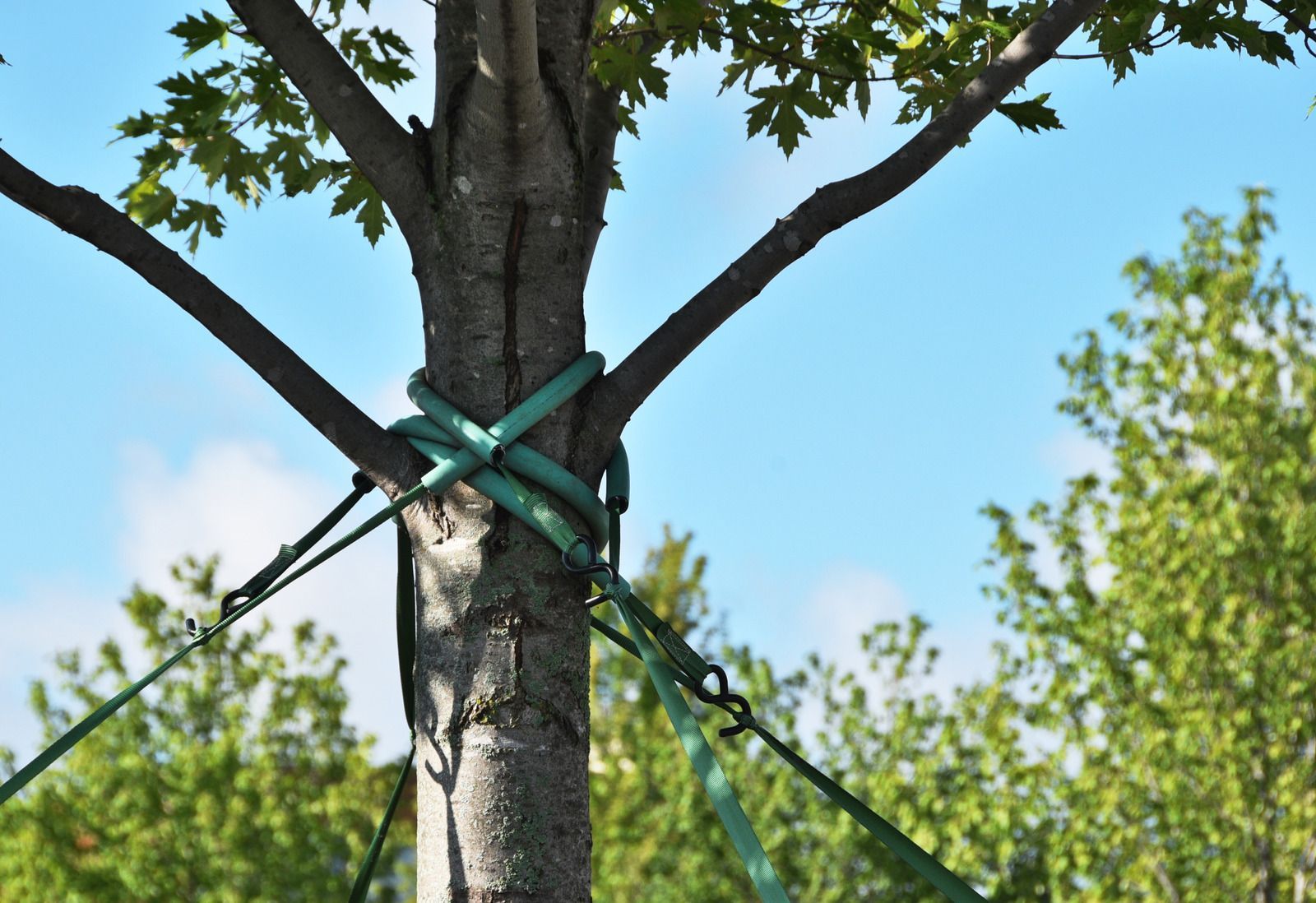
Thinning also gives an arborist a chance to look closely at the inside of the tree. While working through the canopy, a trained crew can spot cracked unions, hollow areas, dead limbs, borer holes, and weak attachments that are impossible to see from the ground. Those findings often lead to other helpful steps such as cabling a weak union or removing a limb that is about to fail, which is why a thinning visit often catches problems before they turn into emergencies.
Frequently Asked Questions
Does crown thinning make a tree grow back thicker?
Not when done correctly. Light, selective thinning keeps the tree balanced and leaves enough foliage to feed itself. Heavy or poorly placed cuts can trigger weak water sprouts, which make the canopy messier rather than healthier.
How much of the canopy should be removed?
About a quarter of the live foliage is the commonly used upper limit in a single season. Older, stressed, or sensitive trees often need less, so an arborist should assess the tree first.
Is crown thinning the same as topping a tree?
No. Topping cuts large limbs back to stubs and causes permanent damage. Thinning removes small branches throughout the crown and keeps the natural shape. Anyone suggesting topping to help a tree through summer deserves a second opinion.
Can I thin my own trees?
Small young trees with reachable branches are one thing. Mature trees involve climbing, ropes, and saws at height, and a wrong cut can damage the tree for years. Leave large trees and anything near roofs or power lines to a trained crew.
When is the best time to thin a tree in the Modesto area?
Late fall through winter suits most valley trees because they are dormant and the canopy structure is easy to see. Some species have their own windows, so confirm timing with an arborist.
Thinning Done Right Helps Trees Beat Summer Heat
Crown thinning works because it respects how a tree actually handles heat. Removing a modest share of crowded, crossing, and weak branches lets air move, lets light reach the interior, and gives a stressed root system less foliage to support. The tree keeps its natural shape, and the work stays small and deliberate. Done in the cooler months and kept light, it sets a mature tree up to meet the next stretch of triple digit days with far less strain.
With 45
years of experience caring for trees in Modesto, CA, Clark's Tree Works
has seen how a well timed, conservative thinning can carry an oak, a sycamore, or a walnut through summers that would otherwise leave it scorched and shedding limbs. The right cuts depend on the species, the age, and the health of the roots. Trees treated this way tend to hold their color longer, resist storm damage, and age gracefully, season after season.