
What Is Tree Cabling and Bracing? When to Strengthen Weak Trees
Trees are vital assets in both urban and suburban landscapes, providing aesthetic appeal, shade, and environmental benefits. However, not all trees are inherently resilient. Structural weaknesses, whether from natural growth patterns, disease, storm damage, or age, can put trees at risk of failure. Weak branches or poorly formed trunks can become safety hazards, especially in residential areas, parks, or commercial properties. Understanding how to identify these vulnerabilities and applying the right preventative measures is essential for tree health, safety, and longevity.
Tree cabling and bracing are specialized arboricultural techniques designed to strengthen structurally compromised trees. These methods help mitigate the risk of branch or trunk failure by providing mechanical support to areas of weakness. For homeowners, property managers, and landscape professionals, knowing when and how to use cabling and bracing is crucial. Properly executed, these interventions can preserve mature trees, prevent property damage, and enhance the overall safety of the surrounding environment. This guide explores the fundamentals of tree cabling and bracing, identifies signs of weak trees, and provides expert insights into best practices for strengthening trees effectively.
Understanding Tree Cabling and Bracing
What Is Tree Cabling?
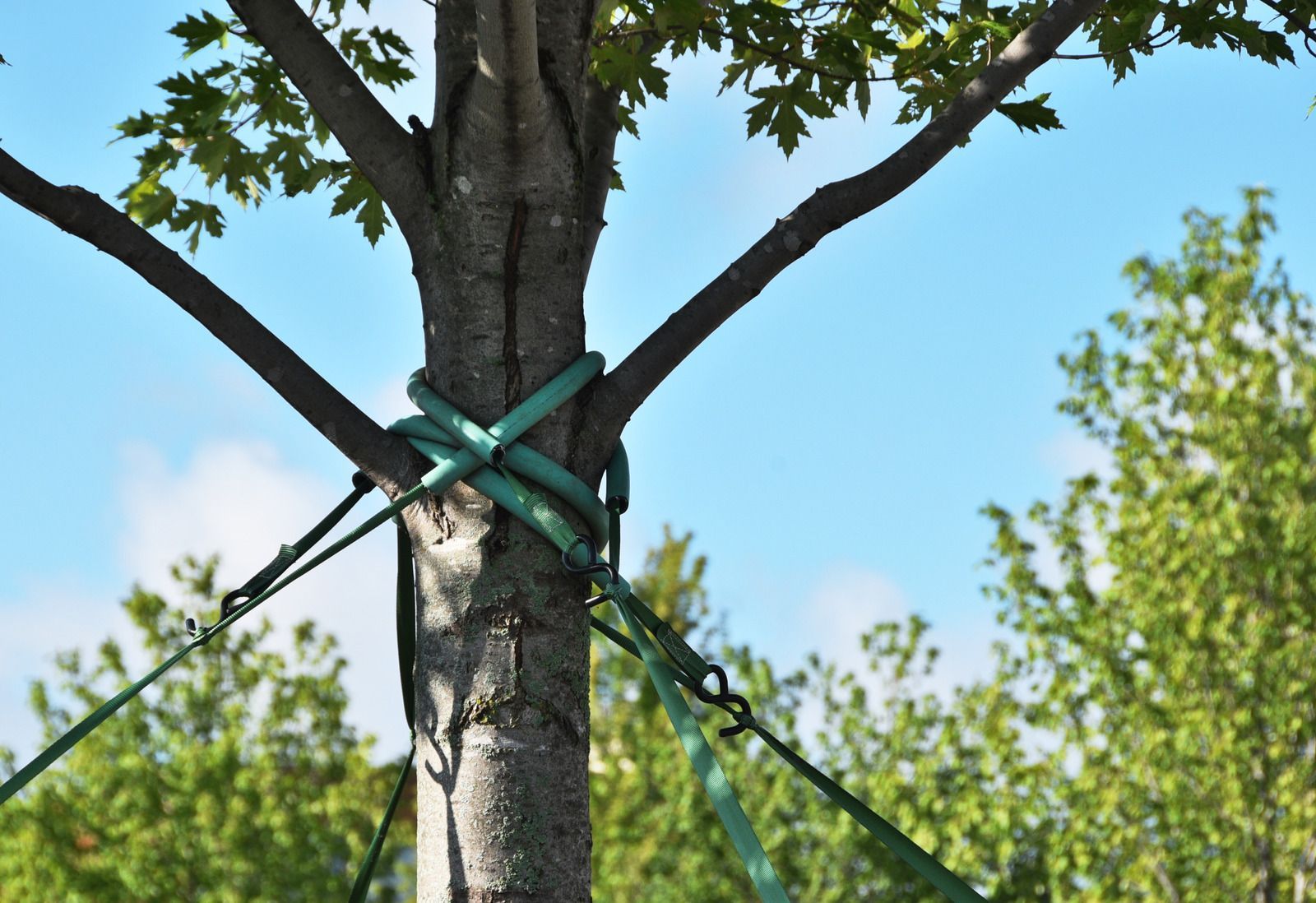
Tree cabling involves installing flexible steel or synthetic cables between major branches or stems of a tree. The primary goal is to redistribute mechanical stress across the tree, reducing the likelihood of failure. Cabling is particularly useful for trees with co-dominant stems—where two or more large branches grow from the same point—or for branches that are heavy, extended, or poorly attached. By strategically placing cables, arborists can limit excessive movement during wind, heavy rain, or snow, which reduces stress at weak points.
What Is Tree Bracing?
Tree bracing, sometimes referred to as rigid bracing or rod installation, complements cabling by providing additional support to compromised limbs or trunks. Unlike cables, which are flexible, braces are typically rigid rods or threaded bars installed through or along structural weak points. Bracing stabilizes cracks, splits, or narrow crotches within the tree, promoting long-term structural integrity. While bracing is more invasive than cabling, it is often necessary for trees with severe defects that cannot be mitigated through cabling alone.
Key Differences Between Cabling and Bracing
Flexibility: Cabling allows for controlled movement, whereas bracing provides rigid support.
Application: Cabling is often used for branch-to-branch support; bracing is used for trunk splits or severe structural defects.
Maintenance: Both require periodic inspection, but bracing may need adjustment or replacement less frequently if properly installed.
By understanding the distinction between cabling and bracing, property owners and arborists can select the most appropriate intervention based on the tree’s condition, size, and environmental factors.
Signs of Weak Trees Requiring Support
Structural Defects
One of the primary reasons trees need cabling or bracing is structural defects. Common signs include co-dominant stems with narrow angles of attachment, heavy lateral branches, or trunks with cracks and splits. Trees exhibiting these defects are more prone to limb failure during storms or under heavy load.
Disease and Decay
Fungal infections, rot, and internal decay can significantly weaken a tree. For example, heart rot compromises the central trunk or large limbs, making mechanical support essential. Signs of decay include mushrooms or conks on the trunk, cavities, or visibly hollow areas.
Environmental Stress
Environmental factors such as high winds, heavy snow, ice, or uneven soil can exacerbate existing weaknesses. Trees on slopes or near structures may experience asymmetrical growth, increasing stress on certain branches. In these scenarios, cabling or bracing can reduce the likelihood of failure.
Real-World Example
Consider an old oak in a residential yard with two co-dominant stems forming a narrow “V” crotch. Over time, the upper branches grow heavier, and cracks develop at the junction. Without intervention, the tree could pose a serious hazard to the home below. Installing a cable between the stems would redistribute the load, while bracing the split could prevent catastrophic failure, allowing the tree to thrive safely.
By recognizing these warning signs early, property owners can take proactive measures, ensuring the tree remains both healthy and safe.
Benefits of Tree Cabling and Bracing
Prolonged Tree Life
Providing structural support allows a tree to grow without excessive stress on vulnerable areas. This not only extends the tree’s lifespan but also maintains its aesthetic value. Trees with prior damage, decay, or natural defects can continue to flourish for decades when properly supported.
Cost Savings
While the initial installation of cabling and bracing requires an investment, it often proves more cost-effective than removing a mature tree and replacing it. Preservation through support measures protects both the environmental and financial value of a property.
Environmental Benefits
By retaining mature trees through proper support, communities maintain shade, air purification, wildlife habitat, and carbon sequestration benefits. Preserving older trees with cabling and bracing contributes to urban sustainability and ecological balance.
Expert Insight
Professional arborists often recommend cabling and bracing for trees with structural weaknesses that are otherwise healthy. The intervention must be carefully designed to avoid harming the tree, ensuring the supports complement natural growth rather than restrict it. Proper installation, combined with regular inspections, maximizes benefits while minimizing risks.
Installation Process and Best Practices
Assessment and Planning
Before any cabling or bracing installation, a thorough assessment is essential. Arborists evaluate the tree’s structural integrity, weight distribution, growth patterns, and potential hazards. Tools such as resistograph testing, aerial inspection, and visual assessment help identify internal decay or weaknesses.
Choosing the Right Materials
High-quality materials are critical for long-term performance. Cables are usually made from galvanized steel or synthetic fibers, while braces may include threaded steel rods or specialized support bars. Materials must accommodate natural tree movement without causing abrasion or stress.
Professional Installation Techniques
Cabling: Cables are anchored securely in structurally sound branches, often using eye bolts or lag screws, and tensioned to allow controlled movement.
Bracing: Braces are installed to support splits or weak crotches, sometimes passing through the limb or trunk and secured with threaded rods.
Combination Systems: For severely compromised trees, a combination of cabling and bracing may be employed for optimal support.
Maintenance and Inspection
Routine inspection every 2–3 years ensures cables and braces remain functional. Signs of wear, loose fittings, or overgrown bark require adjustment or replacement. Neglecting maintenance can compromise the system and the tree’s safety.
Following professional best practices ensures cabling and bracing achieve their intended purpose without damaging the tree, providing years of reliable structural support.
Challenges and Considerations
Potential Risks
While cabling and bracing are beneficial, improper installation can harm trees. Over-tightened cables may restrict growth, while poorly positioned braces can create stress points. Incorrect placement can even accelerate decay or limb failure.
Cost and Accessibility
Installation costs vary depending on tree size, complexity, and materials. Large or high-risk trees may require specialized equipment and aerial access, increasing labor costs. Property owners should weigh these factors against the potential benefits.
Tree Growth and Adaptation
Trees continue to grow even after supports are installed. Cables and braces must be adjustable or designed to accommodate natural growth patterns. Regular monitoring is essential to prevent girdling or structural interference.
When Not to Use Cabling or Bracing
Some trees may be too compromised or diseased for support measures. In such cases, removal may be safer than attempting to preserve a structurally unsound tree. Professional assessment ensures the right decision is made for safety and tree health.
Selecting a Professional Arborist
Choosing a certified, experienced arborist is critical for successful tree cabling and bracing. Look for credentials such as ISA (International Society of Arboriculture) certification, documented experience in structural support, and strong references. A qualified professional provides accurate assessments, selects appropriate materials, and ensures installation aligns with industry standards. Engaging a reputable arborist reduces risks, maximizes tree longevity, and ensures compliance with local safety regulations.
Expert Strategies for Maintaining Supported Trees
After installation, ongoing care is essential. Experts recommend:
- Regular Inspections: Check cables, braces, and attachment points every 1–3 years.
- Pruning: Remove dead or heavy branches to reduce stress.
- Health Monitoring: Address pests, diseases, and soil issues promptly.
- Adjustments: Loosen or replace cables and rods as the tree grows.
Consistent monitoring preserves structural integrity, prevents future hazards, and extends the lifespan of supported trees, safeguarding both property and the environment.
Preserving Trees Through Expert Cabling And Bracing
Tree cabling and bracing are indispensable tools in modern arboriculture, offering solutions to preserve structurally compromised trees while enhancing safety and longevity. By identifying weak points, understanding the appropriate support techniques, and adhering to professional installation standards, property owners can protect both their investments and the natural environment. Whether addressing co-dominant stems, trunk splits, or decay, these interventions allow trees to thrive despite structural challenges, maintaining their beauty, ecological benefits, and value to the landscape.
For homeowners and property managers seeking reliable, expert support, Clark's Tree Works
in Modesto, California, is a trusted authority in tree care. With 45
years of experience, the team specializes in tree cabling, bracing, pruning, and comprehensive health assessments. Their professional approach combines technical expertise, safety-conscious methods, and personalized service. By choosing us, you ensure your trees receive the highest standard of care, prolonging their life while protecting your property. Their commitment to excellence, rooted in decades of experience, makes them the preferred partner for maintaining healthy, safe, and resilient trees.